Brokenbrush: A Bold and Versatile Display Font for Creative Projects
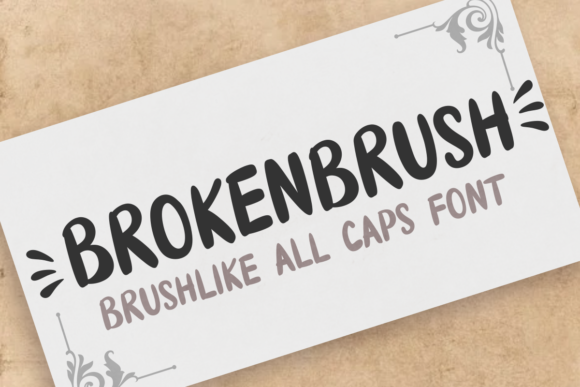
Brokenbrush is a display font that stands out with its bold, thick lettering and natural, simple style. Designed to be versatile and adaptable, it offers a unique aesthetic that can enhance a wide range of creative projects. Whether you're designing logos, headlines, posters, or digital content, Brokenbrush brings a distinctive energy that can elevate your work.
Understanding the Characteristics of Brokenbrush
Brokenbrush is defined by its bold and thick lettered design. Each character has a strong presence, making it ideal for grabbing attention in visual compositions. The font's natural and simple style gives it an organic feel, which contrasts with more rigid or structured typefaces. This balance between strength and simplicity makes it highly versatile.
The thick strokes of Brokenbrush create a sense of weight and authority, while the clean lines ensure readability even at larger sizes. This combination allows designers to use the font in both digital and print formats without compromising clarity or impact.
When to Use Brokenbrush: Best-Fit Situations
Brokenbrush shines in situations where a strong visual statement is needed. It is particularly well-suited for:
- Headlines and titles: Its bold nature makes it perfect for drawing attention to key messages.
- Logos and branding: The unique look of Brokenbrush can help establish a memorable brand identity.
- Posters and advertisements: The font's striking appearance works well in promotional materials.
- Digital banners and social media graphics: Its high contrast and legibility make it effective on screens.
However, due to its thick lettering, Brokenbrush may not be the best choice for long-form text or body copy. It is more effective as a display font rather than a primary text font.
Comparing Brokenbrush with Similar Fonts
While Brokenbrush has its own unique characteristics, it shares similarities with other bold and stylized fonts. For example, fonts like Bebas Neue or Impact also offer a strong, attention-grabbing look. However, Brokenbrush distinguishes itself with its natural and simple style, which provides a more organic feel compared to the more geometric or modern designs of these alternatives.
Another comparison can be made with Bangers, a similarly bold and playful font. While Bangers has a more whimsical and exaggerated look, Brokenbrush maintains a cleaner, more professional edge. This makes Brokenbrush suitable for a broader range of applications, from casual to formal designs.
For those seeking something more elegant but still bold, Playfair Display might be an option. However, Playfair Display has a serif style and a more refined appearance, which is less suited for the same kind of attention-grabbing impact that Brokenbrush provides.
Strengths and Tradeoffs of Using Brokenbrush
The main strength of Brokenbrush lies in its ability to convey confidence and creativity. Its natural and simple style allows it to blend well with various design elements, making it easy to integrate into different layouts and color schemes.
On the other hand, there are some tradeoffs to consider. Because of its thickness, Brokenbrush may not render well in smaller sizes, especially when used in low-resolution environments such as mobile displays or printed materials with limited ink coverage. Additionally, the font’s boldness means it may not be suitable for all design contexts, particularly those requiring subtlety or elegance.
Designers should also consider the legibility of Brokenbrush in different languages and scripts. While it performs well in English, variations in character shapes may affect how it looks in other alphabets or symbol sets.
Practical Examples and Real-World Applications
Let’s explore a few practical examples of how Brokenbrush can be used effectively:
- Logo Design: Imagine creating a logo for a new coffee shop. Using Brokenbrush for the name “Brew Haven” would give the brand a strong, approachable identity that feels both modern and friendly.
- Event Posters: For a music festival poster, using Brokenbrush for the headline “Summer Sounds Festival” would immediately draw the eye and set a vibrant tone.
- Social Media Graphics: When promoting a product launch on Instagram, a short caption in Brokenbrush like “New Arrivals – Now Available!” would stand out against the background and encourage engagement.
In each of these cases, the bold and thick lettering of Brokenbrush helps communicate the message clearly and powerfully.
Evaluating Alternatives and Making an Informed Choice
Before choosing Brokenbrush, it’s important to evaluate whether it aligns with your specific design goals. Consider the following factors:
- Project Type: Is the font being used for a headline, logo, or body text? Brokenbrush is best suited for display purposes.
- Target Audience: Does the audience require a more professional or casual look? Brokenbrush leans toward the casual and creative side.
- Design Context: Will the font be used in digital or print formats? Ensure that the font’s thickness and style will render well in the intended medium.
- Brand Identity: Does the font match the overall brand personality? If the brand is looking for something more refined, another font may be more appropriate.
By carefully considering these aspects, you can determine whether Brokenbrush is the right fit for your project or if another font would better serve your needs.
Ultimately, Brokenbrush offers a bold, thick, and natural style that can bring energy and creativity to any design. Its versatility and distinctiveness make it a valuable tool for designers who want to make a strong visual impact. As with any font, success depends on how well it aligns with the project's requirements and the designer's vision.